
Metro Connect USA 2026 in Fort Lauderdale delivered what it always does: sharp conversations, candid market intelligence, and a clear read on where fiber and wholesale connectivity are headed. Here’s what stood out – and what it means for businesses evaluating their connectivity strategy.
1. Cost-Cutting Is Real – But It’s Not About Going Cheap
The dominant theme in our conversations with wholesale customers was cost-cutting. But the tone wasn’t anxious or reactionary. It was pragmatic.
Yes, everyone welcomes a price discount. But what we heard was more nuanced. Enterprises and small businesses are re-evaluating traditional Dedicated Internet Access (DIA). For many use cases, it’s starting to feel like overkill – and they’re actively looking for an alternative.
These customers don’t want the cheapest possible connection. They want the right connection: more affordable than DIA, but meaningfully more reliable and better performing than low-cost coax cable. That middle ground is the real battleground right now.
That’s exactly why we are so bullish on our Business Internet Access fiber broadband service. It delivers the speed and SLA-backed reliability of fiber at a price point built for modern business applications – not for enterprises paying for capacity they don’t need. If your business is in that in-between space, we’d love to talk.
2. Software Is Stealing the Spotlight
Metro Connect has always centered on the performance and financing of fiber networks. Those conversations remain critical. But the stars of the show this year were the software vendors.
Across the exhibit floor, a wave of technology partners showed increasingly polished OSS/BSS tools covering billing, provisioning, network management, analytics, and customer experience. As operators mature and begin monetizing their builds in earnest, home-grown systems and fragile CRM extensions simply won’t scale. Purpose-built platforms are no longer optional.
What was especially encouraging: the AI conversation has grown up. Nearly every booth referenced AI – that’s expected. What’s different this year is that most vendors could point to real operational challenges they’re solving: automating provisioning workflows, improving fault detection, smarter customer service routing. Compared to even last year, the focus has shifted from “We have AI” to “Here’s how it reduces your operational friction.” That’s a meaningful change.
For fiber operators entering a growth and monetization phase, a maturing software ecosystem is exactly what the industry needed.
3. Professional Dress Is Back
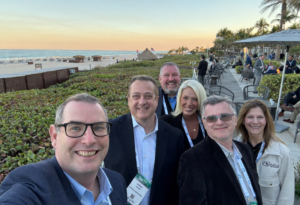
A lighter observation, but worth noting: the blue blazer, blue button-down, khaki pant uniform was in full effect. After years of hoodies and Jordans and hybrid-event comfort, the industry showed up ready to do business. (Dress sneakers remain a contested topic.)
There’s something fitting about that. As fiber networks mature and operators shift from build mode to revenue mode, the tone is evolving – sharper conversations, clearer focus, and yes, better shoes.
What It All Signals
Metro Connect 2026 reflected an industry that’s growing up. Buyers are more disciplined. Operators are focused on monetization. Software partners are solving real problems. The market is improving.
For Stratus Networks, that environment reinforces our strategy: deliver fiber connectivity that fits today’s business needs, support wholesale partners navigating margin pressure, and align with technology partners that enable scalable growth.
Ready to explore what that looks like for your business? Connect with the Stratus team.